Stress Hair Fall: Exams, Jobs and Sleep
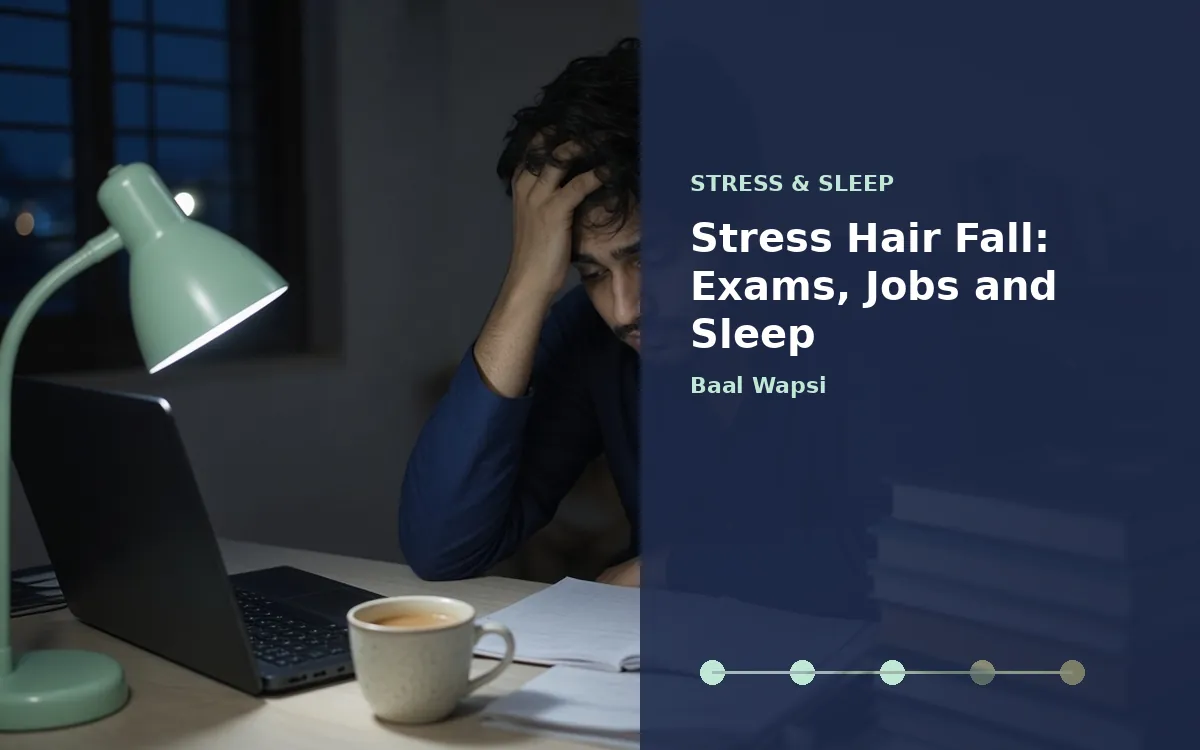
Short answer: yes. Severe or prolonged stress can trigger telogen effluvium, a temporary shedding that typically starts two to three months after the stressful period. Exams, job loss, money worries, grief, family conflict and long-term poor sleep are common triggers. Stress can also worsen dandruff and lead to habits like hair pulling. Shedding usually settles as life calms down, and hair recovers over several months.
How stress affects hair
Research in animals and humans suggests that stress hormones can push hair follicles into the resting phase early. The delay between the stress and the shedding (about two to three months) is why many people don't connect the two.
Example: board exams, the MDCAT or university finals in May and June, then hair fall in August and September.
Common stress triggers in Pakistan
- Exams: matric, FSc, MDCAT, ECAT, CSS, university finals
- Work: job loss, long hours, night shifts, starting a new job, moving abroad for work
- Money worries: inflation, debt, business losses
- Family: weddings (planning stress counts), conflict, caring for a sick parent
- Grief: losing a loved one
- Sleep: chronic short sleep, phone use late at night, shift work
Other ways stress affects hair
- Dandruff flares. Stress commonly worsens dandruff and seborrheic dermatitis.
- Trichotillomania. Some people pull, twist or play with their hair when anxious, causing patchy breakage.
- Poor eating. Skipping meals or living on chai and biscuits can lower protein and iron.
- Alopecia areata. Stress may be one of several triggers for these round, smooth patches in susceptible people.
What helps
Sleep
- Aim for seven or more hours.
- Keep a regular sleep time, even during exams.
- Put your phone away 30 to 60 minutes before bed.
- Keep chai and coffee to before mid-afternoon.
Movement
- A daily walk, a game of cricket or football, the gym or stretching all help lower stress hormones.
- Even 20 to 30 minutes counts.
Food
- Regular meals with protein: anda paratha (not every day), daal chawal, chicken, dahi.
- Eat fruit and vegetables.
- Drink enough water.
Mind
- Break big tasks into small steps.
- Talk to someone you trust: family, friends or a counsellor.
- Many people find comfort in prayer, which is completely compatible with other support.
- Consider professional help if you feel low, anxious or overwhelmed for more than two weeks.
Hair
- Be gentle: a wide-tooth comb and loose styles.
- Treat dandruff if it flares.
- If you notice a pulling habit, keep your hands busy and consider talking to a doctor.
How long until it stops?
Once the stressful period is over and your routine is back on track, shedding typically settles over a few months, and regrowth becomes visible over the following months. Most people recover within six to nine months. If the stress continues, the shedding can continue too.
Stress vs genetic thinning
| Stress-related TE | Genetic thinning | |
|---|---|---|
| Onset | Two to three months after a stressful period | Gradual, over years |
| Pattern | All over | Temples and crown (men), or a widening parting (women) |
| Hair that falls | Full-length hairs with a white bulb | Thinner, shorter hairs over time |
| Outcome | Usually recovers | Progresses without treatment |
Stress can make genetic thinning more noticeable. If your hair doesn't recover after the stress has passed, see a dermatologist.
Myths
- "Stress turns your hair white overnight." Not overnight. Stress may be linked to greying over time, but the science is still developing.
- "Hair fall shampoos fix stress hair fall." They don't affect the follicle cycle.
- "Thinking about hair fall makes it worse." Worry is natural. It's ongoing severe stress that matters, not normal concern.
Quick answers
Can a single bad week cause hair fall? Usually it takes a significant or prolonged stress. Everyday ups and downs don't typically trigger telogen effluvium.
Do anxiety medicines cause hair fall? A few medicines can, but many don't. Never stop a prescribed medicine on your own. Discuss any concern with your doctor.
Can meditation regrow hair? It won't regrow hair directly, but managing stress can help prevent the next round of shedding.
See a doctor if…
- Shedding lasts more than six months after the stressful period
- You notice bald patches, or a pattern of thinning
- You're pulling out your hair and can't stop
- You feel low, hopeless or anxious for more than two weeks, or have thoughts of harming yourself. Please seek help urgently
- You have other symptoms, such as tiredness, weight change or irregular periods
Bottom line
Stress hair fall is real, delayed and usually temporary. Look after your sleep, food and mind, be gentle with your hair, and give it time. Read the full telogen effluvium explainer.
General information only, not medical advice. See a dermatologist for hair loss or scalp conditions.